Instructor Profiles:
Our Team: is comprised of skilled trainers with backgrounds in advocacy, prevention education, social work, healing arts, martial arts, yoga, and dance. Each has completed teacher training with Prevention. Action. Change. and participated in an extended apprenticeship. Prevention. Action. Change is based in Portland, Maine on the unceded land of the Aucocisco Band of the Wabanaki. Our team provides in-person and online training regionally and nationally.
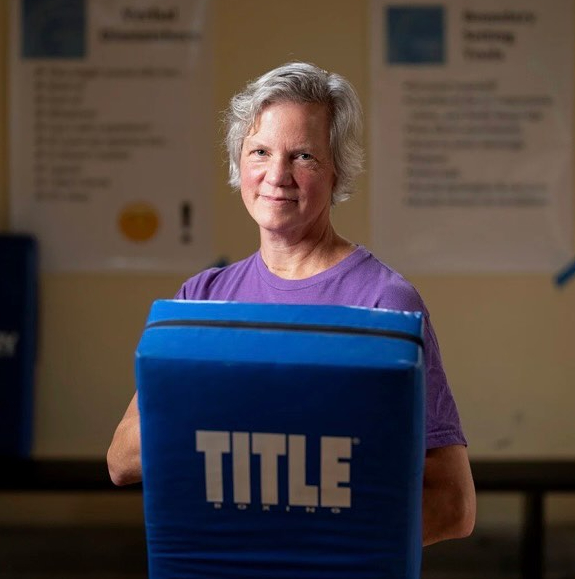
Clara Porter: Clara Porter, (she/her) is the Director of Prevention. Action. Change. A nationally certified instructor in Empowerment Self Defense (ESD) with the National Women’s Martial Arts Federation and the Center for Anti-Violence Education with 30 years experience in the field. Porter holds a Masters of Social Work, is a trained Sexual Assault Victim Advocate, and certified in Advanced Trauma First Aide. She and has extensive experience working with organizations and people of all ages, backgrounds, and identities including those with physical, mental/emotional, and developmental challenges.

AJ Stash: AJ Stash, my pronouns are they/them. I was born and currently live in Southern Maine, the unceded land of the Wabanaki Confederacy. I am 26 years old and identify as genderqueer/transgender/non-binary. I write music and poetry about my life experiences and emotions that are important to me. I enjoy reading books that expand my mind and imagination. I am an adventurer of the outdoors and seek to further my connection to all living beings. I believe in love that is honest, radical, autonomous and contributes to the spiritual growth of all that are involved. I have a mutually caring relationship with my lovely pug, Jazzy, who loves to cuddle and soak up the sun, much like her parent. I have a fondness for things and experiences that may qualify as strange or weird to some, and think that a weird and strange life is a fulfilling one. I believe that change is the only constant in life, and we all have a place in the change that takes place every second. Music is my first passion of life, as it was the first thing that showed me how to love and grow in community with others. I enjoy taking dips in the ocean, at any point of the year, and have a special affinity for octopuses! I moved away from Maine when I was a young adult and became involved in environmental activism and social justice work. I dropped out of college around the time that Trump was elected in 2016, and joined the front lines of the anti pipeline movement. Standing up for what is right, and being an active part of the change that needs to happen in our society, is important to me. When I moved back home to Maine to heal from an injury, I struggled to find my place in that work here at first. Through PAC, I found that I am not only able to heal from my own wounds of being a survivor of sexual abuse from childhood through to adulthood, but am also able to heal alongside others and help to build a community of empowerment while doing so. Being able to share knowledge and skills for safety through teaching empowerment self-defense, active bystander intervention and de-escalation makes my heart sing. In a world where we are constantly faced with systemic oppression, the most radical act is to love one another and love ourselves. Through this work with PAC, we can break down the judgement and hate we are taught in this world, and build our love and strength in community. That is why this work is so important to me.
When I found PAC, I took our Healing Through Empowerment class. And then I took it again. This class helped me cultivate and strengthen my voice and self-confidence. It helped me to believe in my own self-worth, and that I deserve kindness and respect, and all the good things! I started to experience shifts in my life and relationships when I was able to put the tools we learned in class into practice. Teaching, for me, is essential for me to be able to continue to use these tools in my everyday life. Empowerment is a beautiful positive feedback loop. When I teach classes, I witness people having tremendous moments of realizing their own power and worth. Being able to see that empowerment and healing truly contributes to my own empowerment
and healing.
I feel most fulfilled in teaching ESD when I can work with youth, and the queer/trans community. My life would have looked a lot different if I knew what a boundary was when I was a young person. Young people are vulnerable in this world, and are also so powerful! It is important for me to work with young people in order to share skills of safety that they may not otherwise have access to. Being part of the queer community, I feel such heavy grief for the violence and death our community faces. The more that we can expand our understanding and practice of empowerment and safety, the more we can take care of each other to ensure we are not only surviving, but thriving in our lives and being able to live as our true queer selves without fear! I hope to continue teaching with these communities (and others!), in order to better protect ourselves and each other.
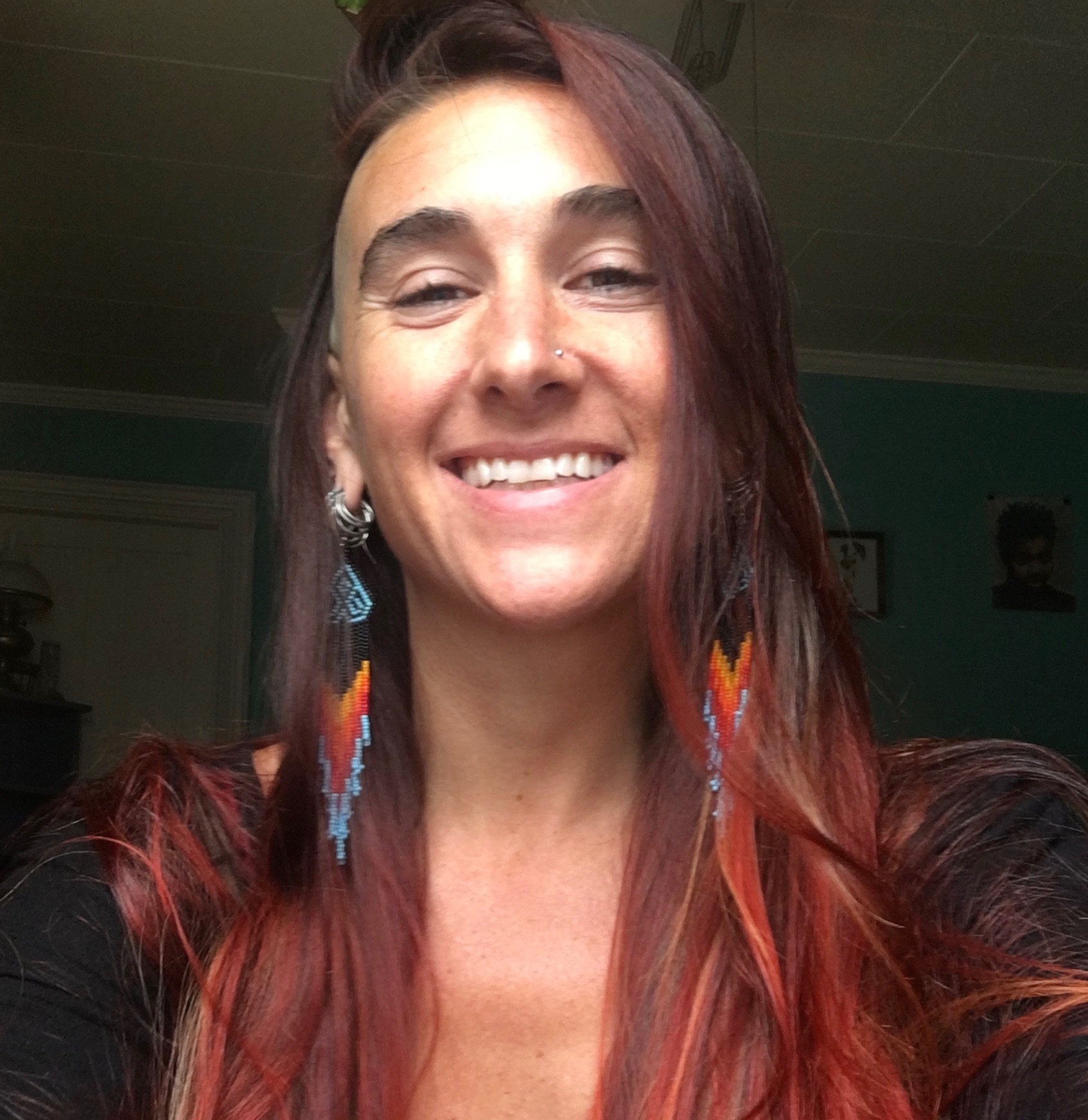
Marita Kennedy-Castro: Marita Kennedy-Castro (she/her) is a fan of rhythms in their many forms. Heartbeats, breath, moon cycles, tides, seasons, the cadence of language, the drum… Vision and knowledge seeking, motivated to contribute to a more just and balanced world, she finds healing through movement.
Marita resides in traditional Wabanaki territory, known today as the state of Maine. Recognizing that we live on stolen land feels essential to her in her quest for a life that centers love, healing, reparations, accountability and truth. She is an embodied movement artist, dance educator, intercultural bridge-builder and earth-lover. Marita is passionate about contributing to cultural preservation, building awareness of our interconnection, and illuminating avenues to individual and collective healing through movement as medicine.
Drawn to violence prevention work as a survivor of sexual violence, living in a patriarchal society that upholds a white supremacy ideology, she considers herself an “artivist” for the wellness of Earth and all living beings. She seeks to support, uplift and empower all who are particularly vulnerable. Aligning with the work of Prevention. Action. Change. has been natural and life-changing for Marita. She finds being on a team of change-makers and culture-shifters to be incredibly gratifying.
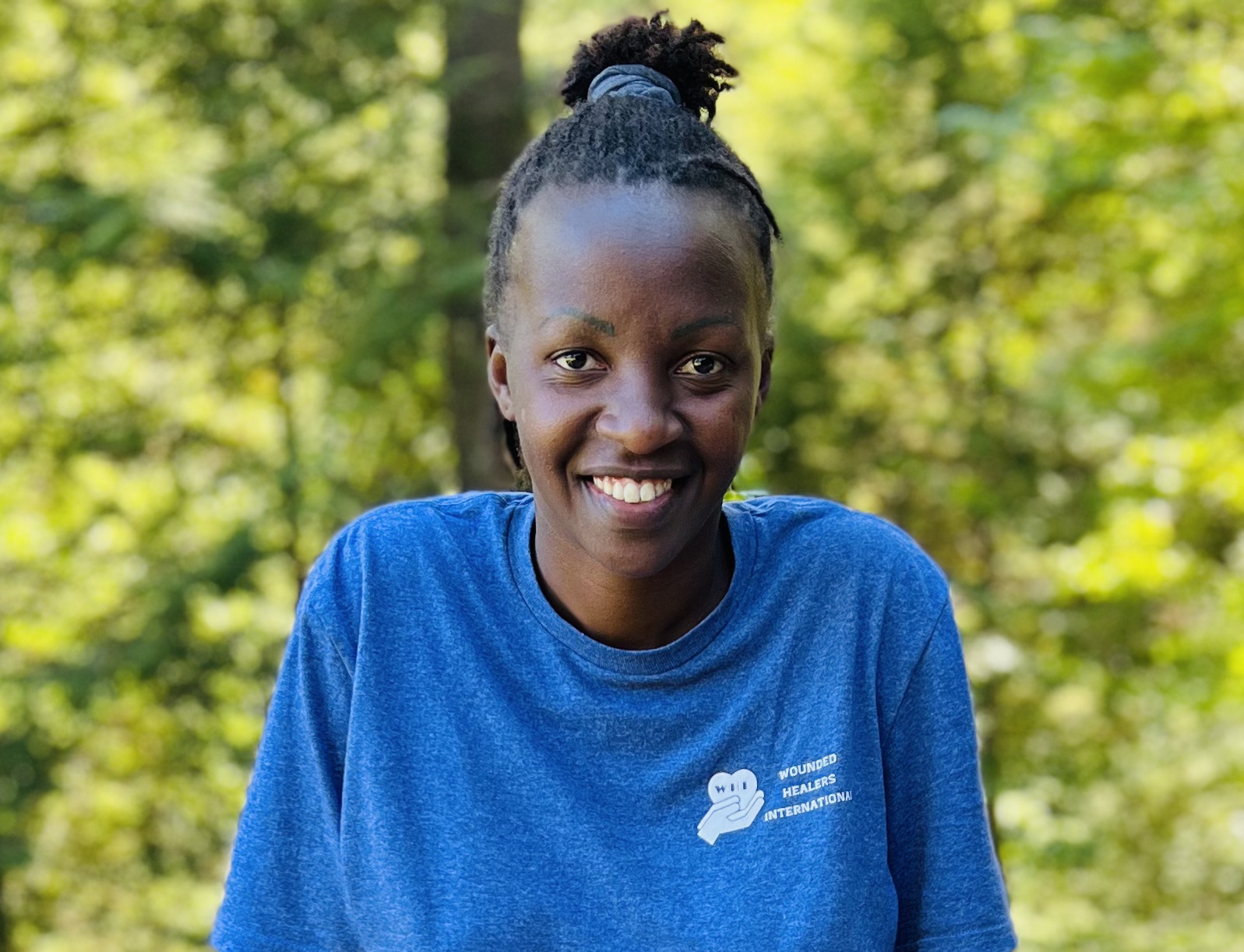
Nuna Gleason: Nuna Gleason (she/her) is the Executive Director of Wounded Healers International. She is a dedicated advocate and educator committed to transforming cultures of sexual violence. A survivor of sexual violence herself, Nuna’s journey toward healing began with learning basic Empowerment Self-Defense (ESD) in 2019 while in Kenya. This experience restored her sense of control and belief in her right to safety, inspiring her to advance her skills and become a passionate ESD facilitator.
Nuna teaches ESD to women and girls in Kenya and African women in Maine, empowering them to recognize, resist, and combat gender-based violence. Her work addresses the social and cultural norms that perpetuate violence, with a particular focus on marginalized communities. Through her efforts, many participants have, for the first time, asserted their boundaries and embraced their power to say “no.”
In Maine, Nuna actively partners with Prevention. Action. Change. to engage the African community and other marginalized groups, including Black women and non-binary individuals. Her vision includes expanding ESD training in Kenya by raising funds to develop a team of local instructors, thereby increasing the reach and impact of this transformative work.
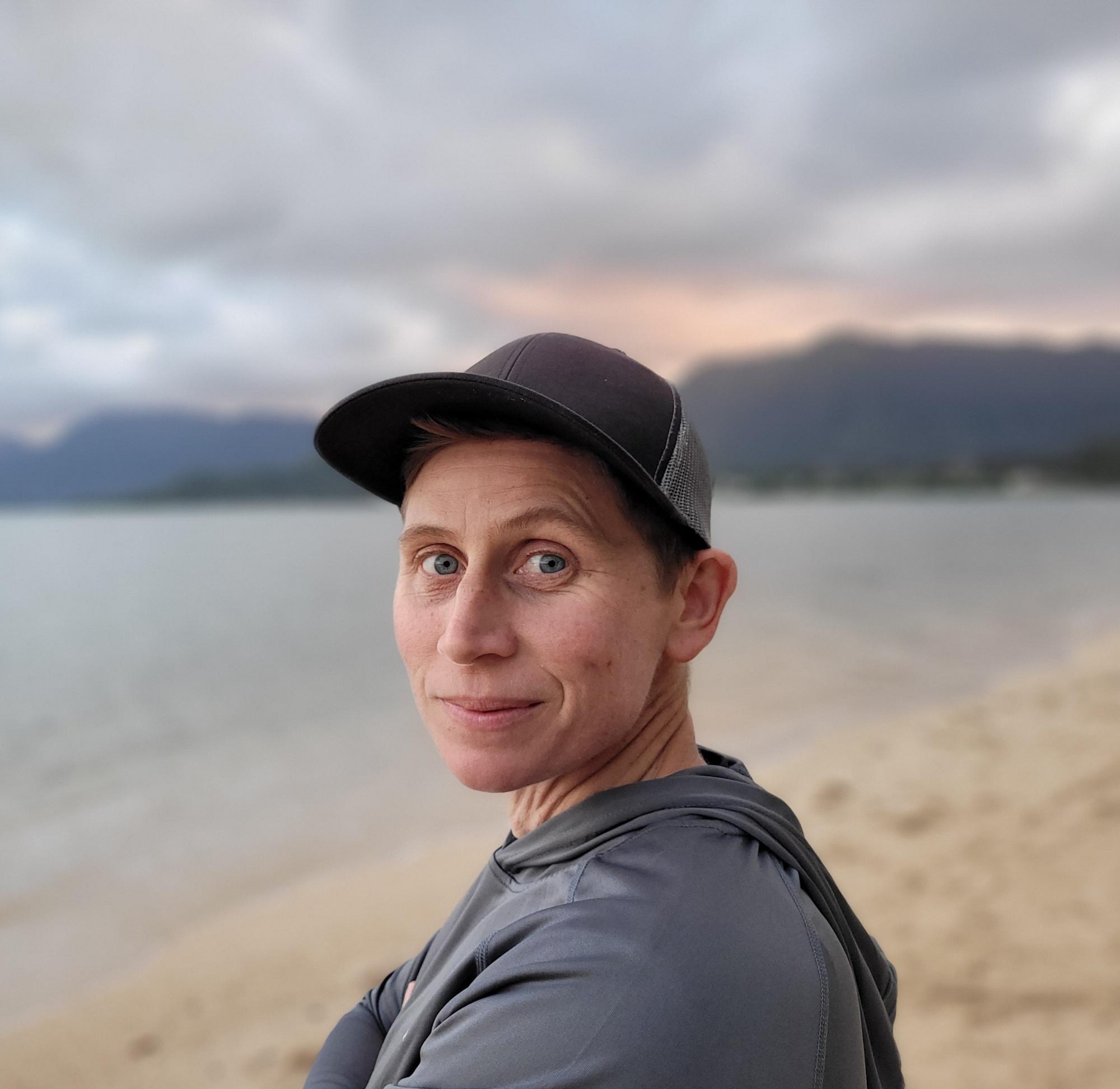
Kellie Owen: Kellie Owen, my pronouns are they/she and I am living in the San Francisco Bay Area. When I’m not teaching ESD I am working in my garden, running and teaching martial arts.
I found ESD through my martial arts school. I took an ESD teacher training course in which Clara Porter was a guest speaker. The way PAC Maine teaches ESD instantly resonated with me. I participated in several PAC Maine classes and had the opportunity to do our teacher training, which led to me becoming a facilitator. Witnessing a participants ability to change motivates me to do this work. Everyone brings their unique experience to a training. I appreciate the opportunity to learn from our participants and gain new perspectives.
I have seen our participants gain confidence, learn how to set boundaries and feel safer in their bodies. We create a space for people to become more present and learn how to express their needs. We give them the tools to empower themselves.
I hope our ESD work continues to promote healing and growth in the people we work with. My vision is each
participant in our workshops take the tools they learn and use them to lead more present and empowered lives.

Dan Kipp: Dan Kipp, my pronouns are he/him and I live in Brunswick, ME with my fiance, our two chihuahuas, and our one-hundred-and-something houseplants. I love reading, listening to music, dancing, cooking, and gardening. I have yet to be successful in doing them all at the same time, however.
My work with PAC is part of my larger mission to prevent violence and promote peace. I value empowerment as the guiding principle behind all of the educational practices (including ESD, non-violent communication, and experience as an educator and advocate within the movement to end intimate partner violence) that inform my efforts. It lights me up to guide people into unlearning oppressive mindsets and behaviors, as well as learning and relearning tools for liberation.
I love bearing witness to, and taking part in, moments of shared reality during our workshops. The space for vulnerability and truth telling that PAC facilitators strive to co-create with participants, and the trust and bravery that everyone displays in utilizing that safer space, is special. The impact of the relationships that are built, as well as the healing and leaning into growth edges that occurs individually and collectively, is palpable.
I hope to engage more men and boys in the feminist learning that ESD has to offer. I believe in empowering men and boys to resist oppressive, and specifically toxic masculine, standards of being. I support the development of men and boys who practice justice, equality, respect, and non-violence, and thereby contribute to a world in which everyone can live safer and more fulfilled lives.

Brigit McCallum: Brigit McCallum, I use she and they pronouns. I live in the part of traditional Wabanaki Territory that is now called York County, in the town of North Waterboro, Maine. I have been involved with Prevention Action Change for about four years and came to that work as a lifelong teacher and coach, having taught everything from Pre-K to PhD! Now, as an older adult, I still teach things that I love — mosaic art, garlic growing and home composting, often through adult education programs. I love being part of my local community and over the years have been involved in the workings of the library, the community garden, the transfer station committee and the local newspaper. With others I have created mosaic murals located at the library entrance, on the shed at the community garden, as well as smaller pieces at the fire station and food pantry.
I discovered Prevention Action Change in 2018 when events in national politics triggered strong memories of my own experience of sexual assault as a young adult, and I needed help in dealing with them. I had the good fortune of hearing of the PAC Healing through Empowerment class, and it was just what I needed to “recover” myself. I decided, as someone who has always worked for justice in relationship, that this was work I wanted to be involved with.
I believe that growth is part of our entire life span, even as ageism may add another layer of challenge to other aspects of our identities. While I have years of experience as a learner and a teacher, working with PAC has inspired me to continue to expand my own boundaries as a risk taker and as a mentor to others as they seek to heal and grow. I have a particular interest in bringing the tools that PAC offers to other older adults as we face the changes that life brings to each of us. With the knowledge that we can hold strong boundaries for self-protection, we may simultaneously dare to expand our horizons of possibility and the capacity to grow as long as we live.
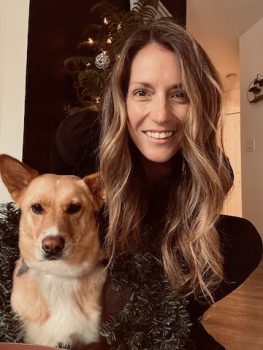
My name is Ali (she/her/they/them). I am 37 years old and I live in Scarborough, ME. During my free time, I love to be outside. I enjoy hiking, snowboarding, and paddleboarding. I love traveling and exploring new places, and embrace opportunities for exploration and growth. I also really enjoy being near the ocean and attending concerts. There is something about the ocean and music that allows me to feel connected to myself, the earth and others.
I took an ESD class as a survivor of harassment and assault so that I could feel more confident and empowered to keep myself safe. After the class I wanted to remain connected to PAC and help others to find their version of safety and empowerment.
In myself I have noticed that I feel more empowered and confident to act (or not act) depending on the situation. I have heard participants’ voice similar feelings. An additional impact I have noticed is relationship building.
This is such as beautiful part of PAC’s mission and impact. People are coming together to prevent harm and to promote positive change for and within communities.
My hopes from ESD for the future include application at the personal, interpersonal and community level. My intention is to continue to learn as much about ESD and myself as I can. The work of ESD, especially at the preventative level, can improve safety in our homes, schools, workplaces, and community. Everyone deserves to feel safe in their surroundings, whatever and wherever that may be.
 Prevention. Action. Change.